
About Carysfort Lighthouse Reef
Most snorkel boats never come here.
Carysfort Lighthouse Reef sits at the northern boundary of the Florida Keys National Marine Sanctuary — further out, less visited, and more alive than almost anything else on the reef system. While other operators run the same two sites every day, we take you somewhere most tourists never find.
Standing in the water at Carysfort, with a 172-year-old iron lighthouse rising above you and untouched coral stretching as far as you can see below, you understand why our crew calls this the secret gem of the Keys.
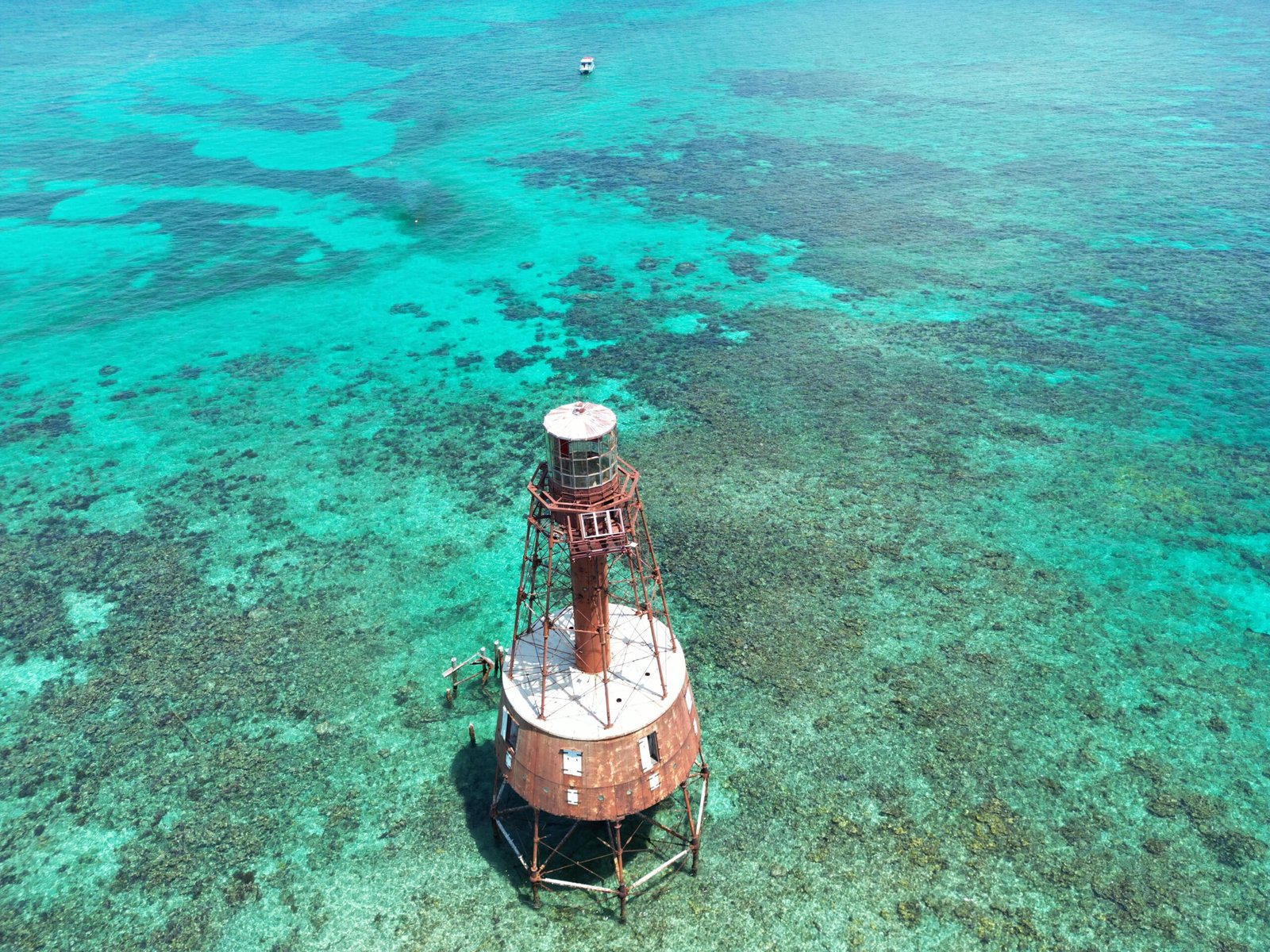
The Carysfort Lighthouse
A Landmark Above and Below the Water
The Carysfort Reef Lighthouse was built in 1852, making it the oldest iron lighthouse in the United States. It rises 112 feet above the water — visible for miles in every direction — and has stood watch over this reef for over 170 years.
The reef is named for the HMS Carysfort, a British warship that ran aground here in 1770. Between 1833 and 1841 alone, 57 ships were lost on Carysfort Reef. The lighthouse was built to stop the carnage.
Today the lighthouse stands decommissioned but intact, its red iron tower a striking landmark rising from the turquoise water. From the surface, snorkeling directly beneath it, you can look up through the water at the tower above and down at the coral gardens below simultaneously.
There is nothing else like it in the Florida Keys.
Carysfort Reef
What Makes Carysfort Unique?
Carysfort has something most reefs don’t — a double reef configuration. Two distinct reef structures, one behind the other, each with its own coral formations and marine life.
The shallow inner reef near the lighthouse starts at just 5 feet deep. Vast fields of boulder coral — one of the most important reef-building species in the Caribbean — spread across the sandy bottom in formations you can snorkel through like a maze. Elkhorn coral is now a threatened species. Seeing it here, healthy and growing, is genuinely rare.
The outer reef drops gradually to deeper water, with massive star corals looming over ridges, gullies, and occasional swim-through tunnels.
Because Carysfort is further from Key Largo than most other sites, few boats make the trip. That means less boat traffic, less human disturbance, and healthier coral than you’ll find at more accessible reefs.
It also means you rarely share the water with more than one or two other boats. At Molasses on a busy Saturday there might be eight operators running trips simultaneously. At Carysfort you will likely have the reef nearly to yourself.
That solitude is the point.

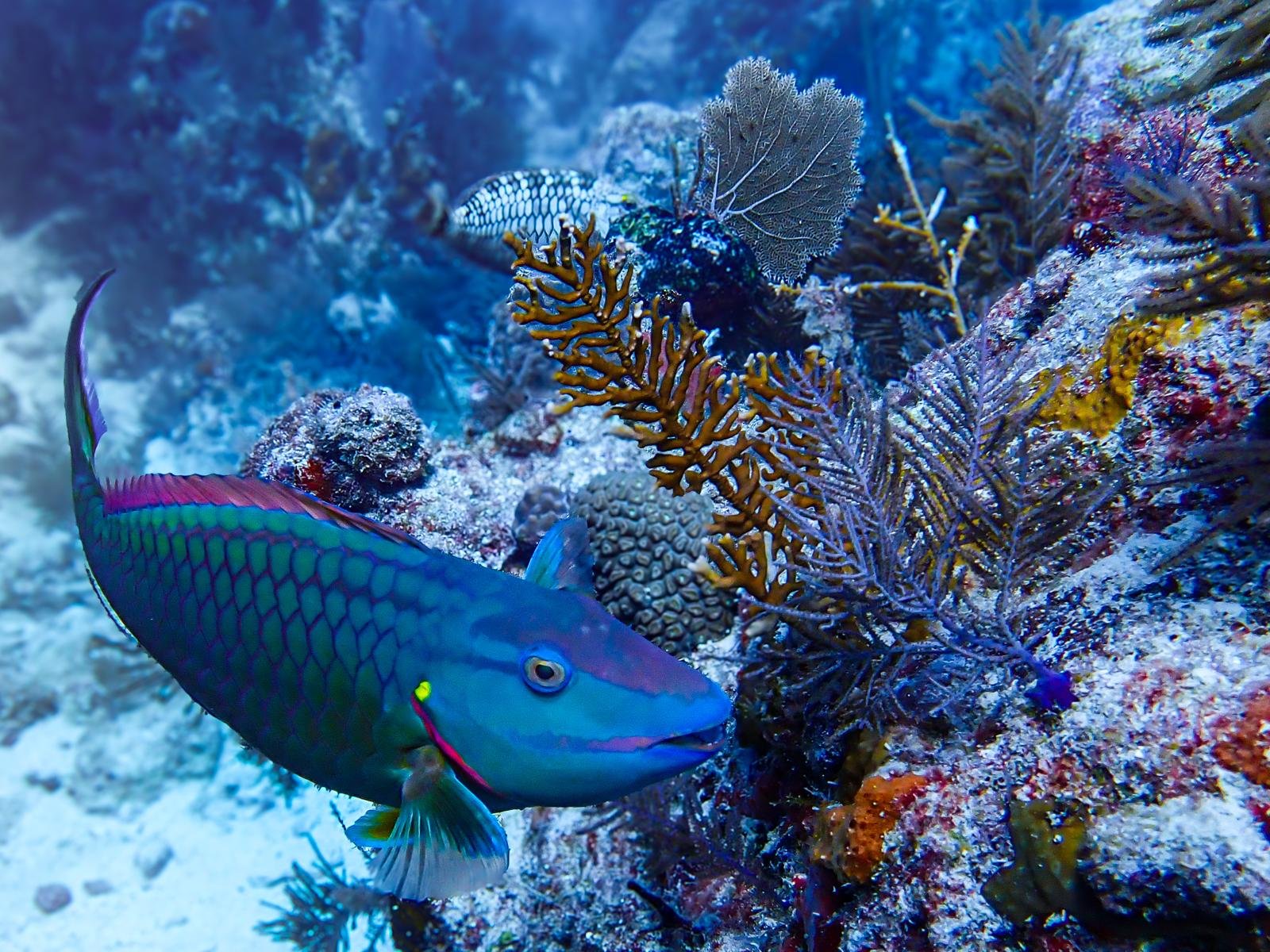
Carysfort Marine Life
What You’ll See at Carysfort
The reduced boat traffic at Carysfort means the marine life is less habituated to humans — and more likely to behave naturally around you.
Parrotfish grazing across the coral gardens. French and gray angelfish traveling the reef edge in pairs. Schools of grunt hovering in the water column above the coral heads. Barracuda — long, silver, motionless — watching you watch them.
Moray eels in the crevices. Spiny lobster tucked under ledges. Nurse sharks resting in the sandy channels between coral fingers. Sea turtles — green and loggerhead — surfacing for air and returning to rest on the bottom. Turtles here love the protected flats of Turtle grass and are visible year round.
Eagle rays pass through Carysfort regularly, gliding through the blue on six-foot wingspans. Patient snorkelers who go still and wait often get the longest encounters.
The Coral Restoration Foundation maintains active coral restoration sites at Carysfort — one of seven reefs selected for their Mission: Iconic Reefs program. You may see coral nurseries and recently planted fragments during your visit. This is conservation happening in real time.
The Silent World Difference
Why Most Boats Don’t Go Here — And Why We Do
Carysfort is further offshore than the Christ of the Abyss or Molasses Reef. The boat ride takes longer. Most operators skip it because it’s easier to run closer sites day after day.
We go because it’s better.
Our Siren catamaran is fast enough to make Carysfort a viable stop on a multi-site trip without sacrificing your time in the water. We’ve been running trips to Carysfort for years and know exactly which sections of the reef give you the best snorkeling on any given day.
We cap our boats below maximum capacity — so you have the space, the crew attention, and the experience that a crowded boat can never give you.
And we run snorkel-only boats. No scuba divers, no waiting, no compromise. The entire trip is built around your time in the water.
5.0 stars from over 4,500 reviewers. This is what that looks like in practice.
Which Trip Takes You to Carysfort
Carysfort Lighthouse Reef is featured on our Icons and Secrets Tour — one of our most requested premium Siren trips.
- The Icons and Secrets Tour — $99 | Three sites, 4.5 hours. The Christ of the Abyss, the A Wreck, and Carysfort Lighthouse Reef. Two full hours in the water. Famous landmarks plus hidden gems most tourists never find. The trip our crew recommends when guests want something different from the standard Key Largo experience. → Book the Icons and Secrets Tour
- Private Charter | Your group, your boat, your sites. Want Carysfort plus the Christ — all in one day? We can make that happen on a private charter. Groups of 8 or more often find private charter pricing surprisingly comparable to individual tickets. Contact us to check availability. → Inquire About a Private Charter
Practical Information
Everything You Need to Know
- How far offshore is Carysfort Reef? Approximately 6 miles offshore at the northern boundary of the Key Largo Management Area. Boat ride time is roughly 40 minutes from our dock — slightly longer than closer sites, completely worth it.
- How deep is the water at Carysfort Reef? The shallow reef near the lighthouse starts at 5 feet. The snorkel zones range from 5 to 25 feet. As a snorkeler you stay on the surface — the coral formations rise up to meet you. No diving required.
- Is Carysfort suitable for beginners? Yes. The shallow coral gardens near the lighthouse are some of the most beginner-friendly snorkeling on the reef system — calm, clear, and stunning. If you’ve never snorkeled before, you’ll feel comfortable here.
- What is the best time to visit Carysfort Reef? Because Carysfort is relatively remote, it’s less affected by boat traffic regardless of time of day. Morning trips still offer the calmest conditions. Carysfort reef provides the most consistent visibility and calm conditions.
- Is Carysfort in the National Marine Sanctuary? Yes. Carysfort is a Sanctuary Preservation Area — the largest SPA in the Florida Keys National Marine Sanctuary at 3.78 square miles. No fishing, no collecting, no touching or standing on coral. All rules are covered in our pre-trip briefing.
- Why don’t more operators go to Carysfort? Distance. Most operators run the shortest routes to keep costs down and turnaround fast. We go further because the reef is better. Our boats are built for it and our trips are designed around the experience, not the efficiency.
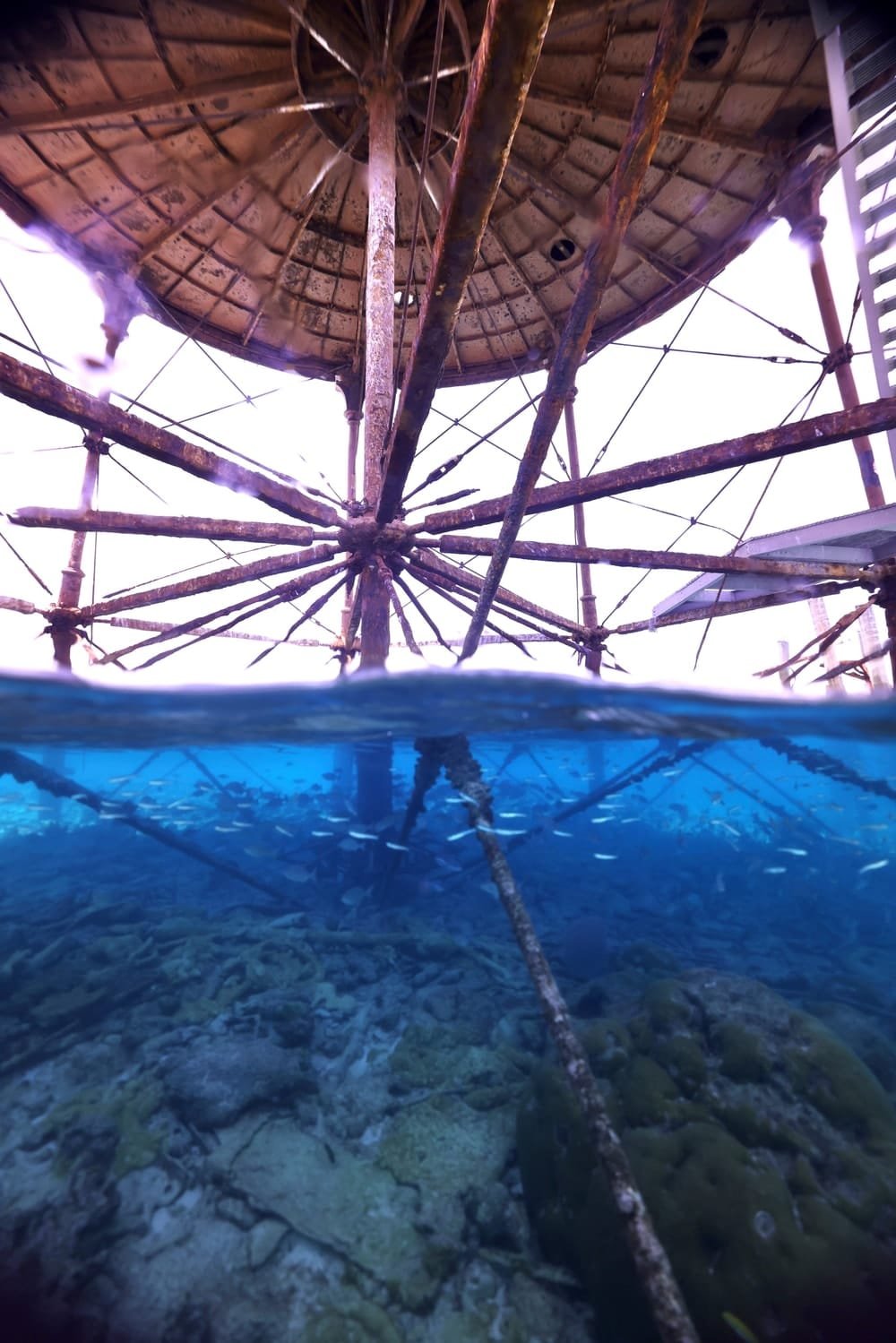
The Reef Most Visitors Never See
Carysfort is where you go when you’ve snorkeled the Christ of the Abyss and want to understand what the Keys reef looks like without the crowds. It’s where our crew goes on their days off. It’s the reef that makes people come back to Key Largo the following year.
Most visitors never make it here. The ones who do never forget it.
Questions? Call us directly: (305) 451-3252